
The Best Things to Do in Shibuya, Tokyo
A crossing, a rooftop and a forest, all within 20 minutes on foot.
- Half a day
- 5 of 7 free
- Places covered
- 7
- Free to visit
- 5
- Time to allow
- Half a day
- Lines serving it
- 4
What the district is
Up to 3,000 people cross Shibuya’s main junction on one green light, and that’s what most people come to see. The district around it also has the best paid view in Tokyo and one of the biggest urban forests in the country, a 20-minute walk north.
It’s compact. The crossing, Hachikō, Shibuya Sky, Miyashita Park and the Center Gai backstreets are all within 10 minutes of the station, and you can walk to Meiji Jingū through Harajuku. Half a day covers it, though most people come in the evening.
7 places, what each costs
Durations are what these actually take. 5 of the 7 are free.
How Shibuya fits together
The crossing is right outside the Hachikō exit and everything spreads out from there. Center Gai runs north into the shops. Dogenzaka climbs west into the bars. Miyashita Park is 5 minutes north-east along the tracks, and Shibuya Sky is inside Scramble Square directly above the station. Cat Street takes you north to Harajuku in about 15 minutes, with Meiji Jingū 5 minutes further. The station’s been under construction for years and the exits move, so allow more time than the map suggests.
Getting here
- Shibuya — JR Yamanote and Saikyō lines
- Shibuya — Tokyo Metro Ginza, Hanzōmon and Fukutoshin lines
- Shibuya — Tōkyū Tōyoko and Den-en-toshi lines
- Harajuku and Meiji-jingūmae — one stop north, for the shrine
Everything worth your time
Entry prices, and the time each one actually takes.
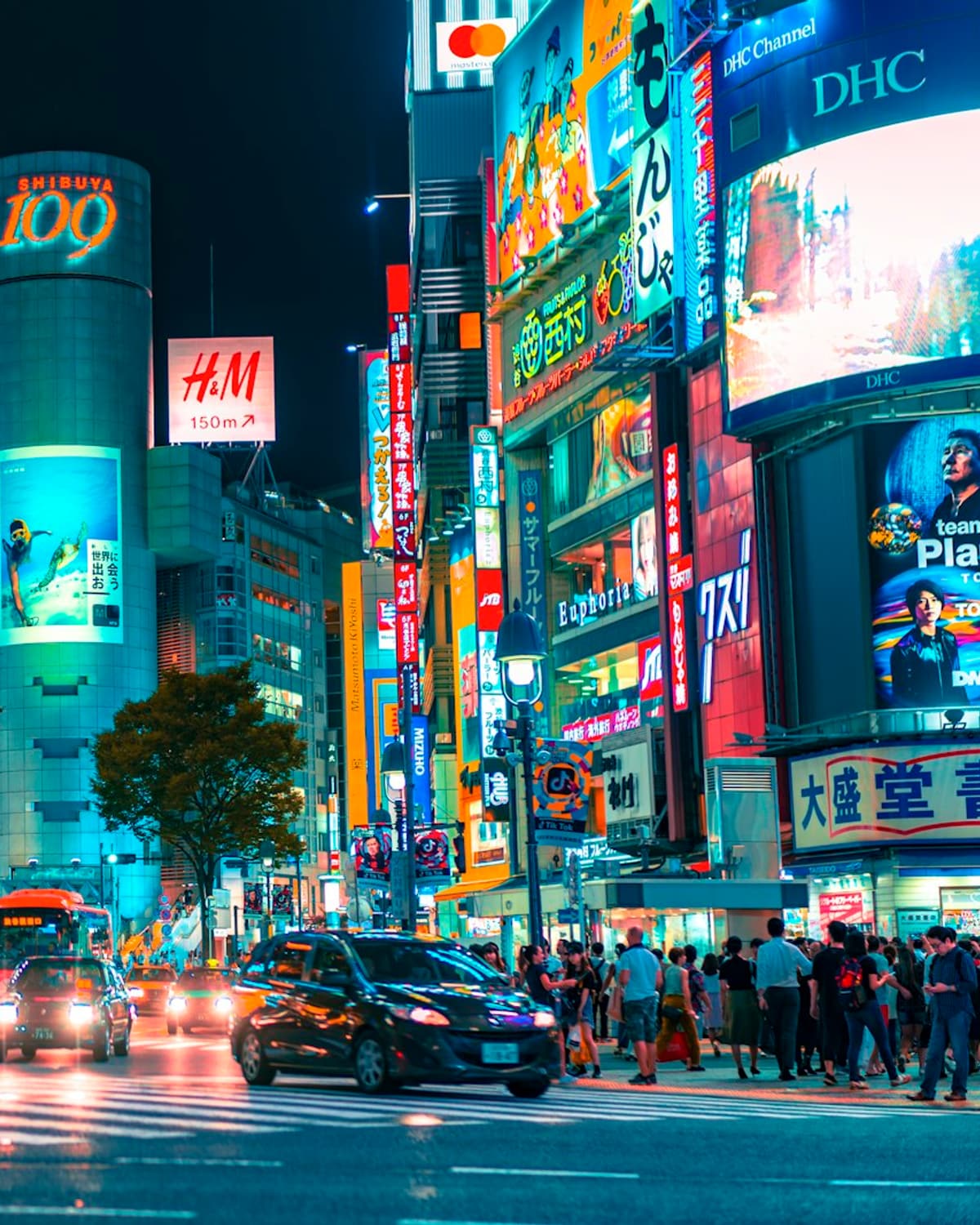
Shibuya Crossing
Pedestrian scramble junction
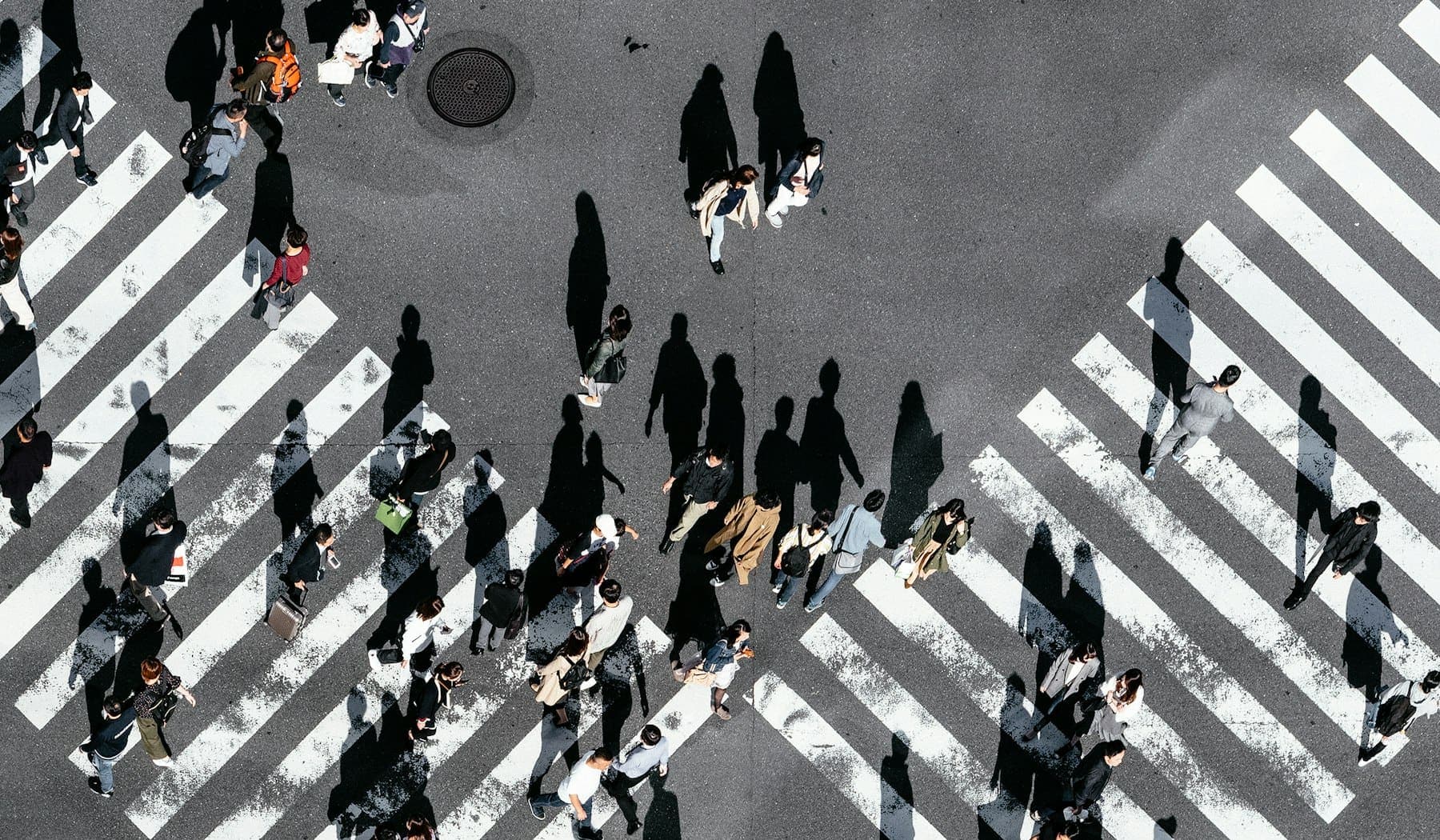
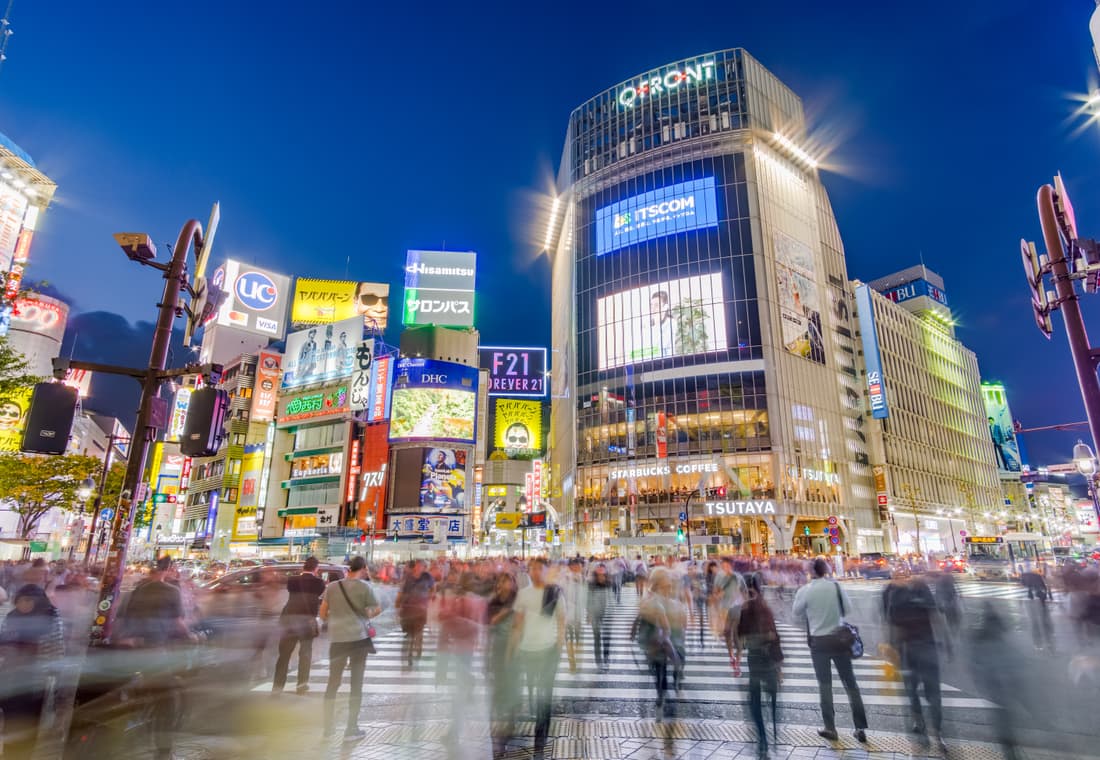
Five crossings go green at once. At peak that moves as many as 3,000 people in one cycle, and a cycle comes round about every 2 minutes. It’s busiest after dark, and in rain the screens reflect off the wet road. Crossing it takes about 40 seconds, and it’s worth doing before you go looking for somewhere to watch from.
Our take
The free views beat the paid ones. The second-floor walkway inside the station and the Mag’s Park roof above Shibuya 109 both look straight down on it. The Starbucks in the Tsutaya building has the classic angle, if you can get a window seat, which at busy times you can’t.
Benh LIEU SONG (Flickr)CC BY-SA 2.0
- Cost
- Free
- Allow
- 30 minutes
Hachikō
Bronze statue of a dog, first cast 1934
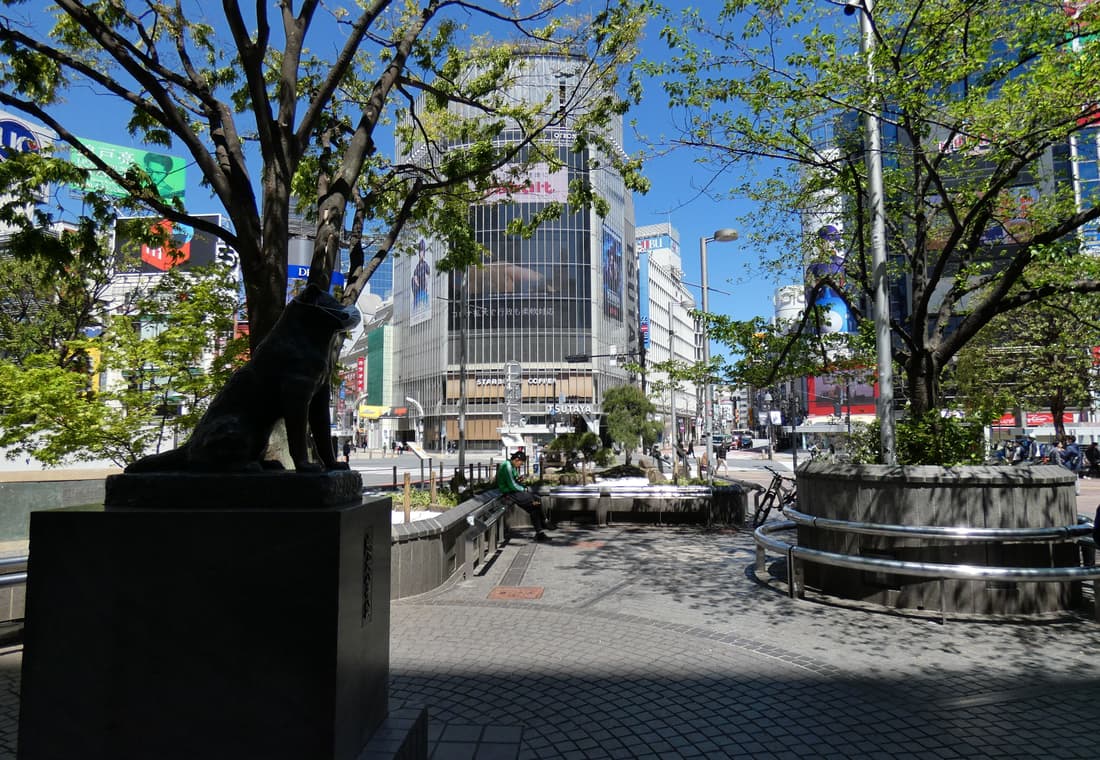
Hachikō was an Akita who kept turning up to meet his owner’s train for nearly 10 years after the owner died in 1925. The statue is now the most-used meeting point in Tokyo. The original was melted down during the war, and the one standing there was made in 1948 by the son of the first sculptor.
Our take
It’s a small statue with a permanent queue for photos. Worth half a minute and the story behind it. Not worth a detour.
AsanagiCC0
- Cost
- Free
- Allow
- 10 minutes
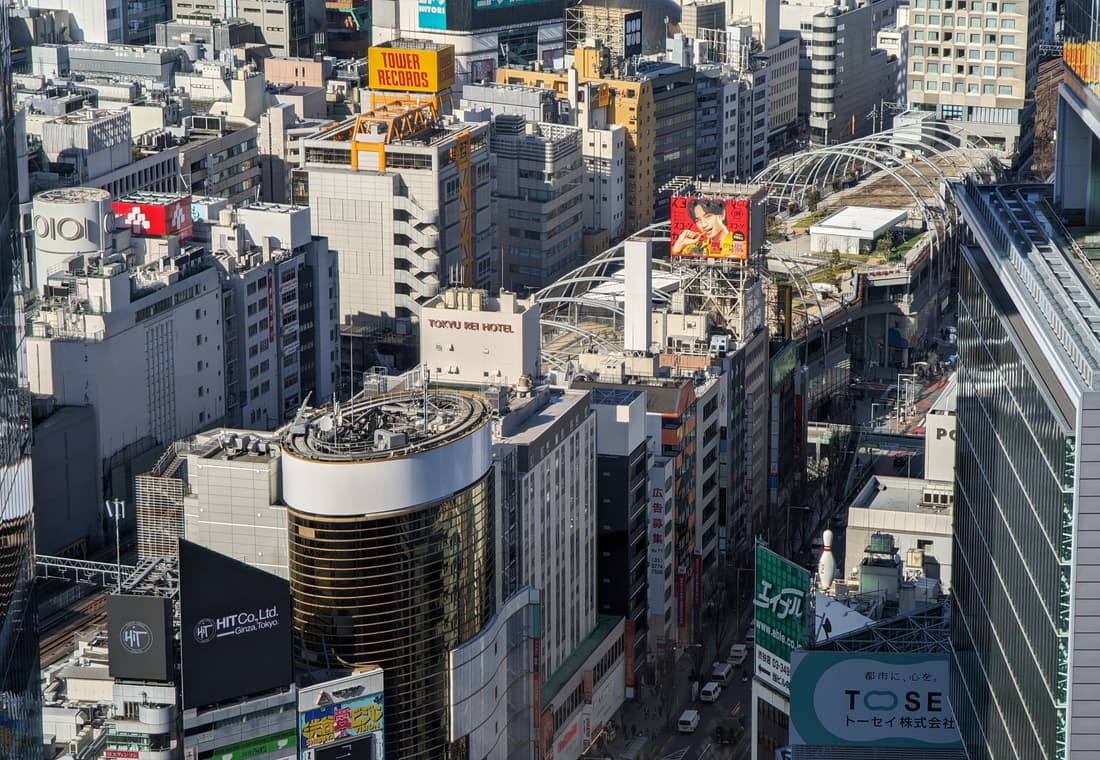
Shibuya Sky
Open-air rooftop observation deck, 229 metres
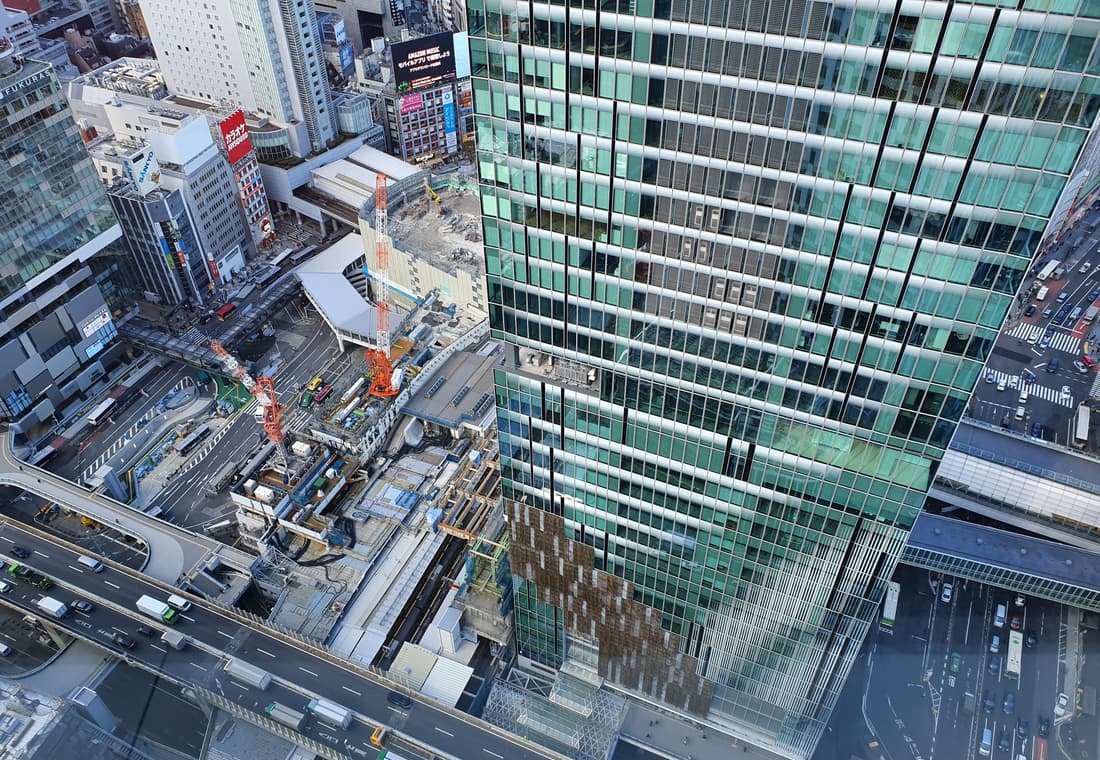
This is the roof of Shibuya Scramble Square, and it’s genuinely open to the sky rather than sealed behind glass, which is rare in Tokyo. There’s a bare deck, a helipad, a glass edge and hammocks. It looks straight down on the crossing, and west to Fuji when it’s clear. Tickets are about ¥2,500 online with timed entry, and more if you buy at the door.
Our take
The one paid view in Tokyo that earns the money, because the deck is open air rather than behind glass. Book a slot 40–60 minutes before sunset and you get the city in daylight, at dusk, and lit. Those slots go weeks ahead. It closes in high wind or rain and you won’t automatically get your money back.
SycedCC0
- Cost
- About ¥2,500 online
- Allow
- 1 to 1.5 hours
Time to allow
Half a day
What a first visit gets wrong
- Shibuya Station is a permanent building site and the exits keep moving. Give yourself an extra 10 minutes on any connection here.
- Meiji Jingū closes at sunset, which in December is just after 4pm. It doesn’t work as an evening plan in winter.
- Center Gai is pedestrianised and slow after dark. If you’re crossing Shibuya rather than shopping in it, the streets one block either side are quicker.
- The bars here stay open past the last train. Check when your line stops running before the second drink.
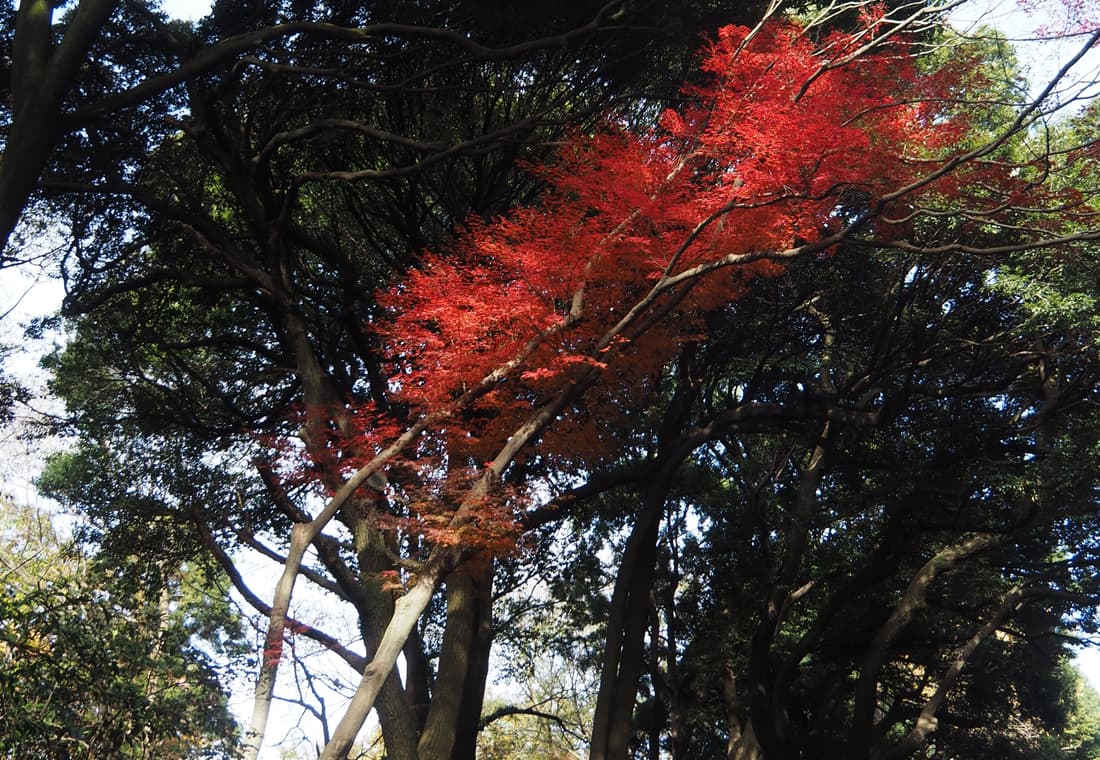
Meiji Jingū
Shinto shrine, completed 1920, in a 70-hectare forest
The shrine honours Emperor Meiji and Empress Shōken, and it stands in a forest of roughly 100,000 trees. Every province in Japan donated them and volunteers planted them a century ago. None of it grew wild — it was planted to turn into what you walk through now. The path from the torii to the shrine takes 10 minutes and blocks out most of the traffic noise.
Our take
Free, and the quietest hour you’ll find this close to Shibuya. Go at 8am, before the coach groups. Traditional weddings cross the courtyard most weekend mornings.
Laika ac from UKCC BY-SA 2.0
- Cost
- Free
- Allow
- 1 to 1.5 hours
Miyashita Park
Rooftop park over a shopping complex, rebuilt 2020
They lifted a park onto the roof of a three-storey shop block beside the tracks, with a skate bowl, a climbing wall and lawn. Underneath runs Shibuya Yokochō, a covered street of small restaurants arranged by region of Japan, open very late.
Our take
Somewhere free to sit down, which Shibuya otherwise doesn’t give you. The food street below is louder and dearer than the Shinjuku equivalent, and it works better for a drink than a meal.
SycedCC0
- Cost
- Free
- Allow
- 45 minutes
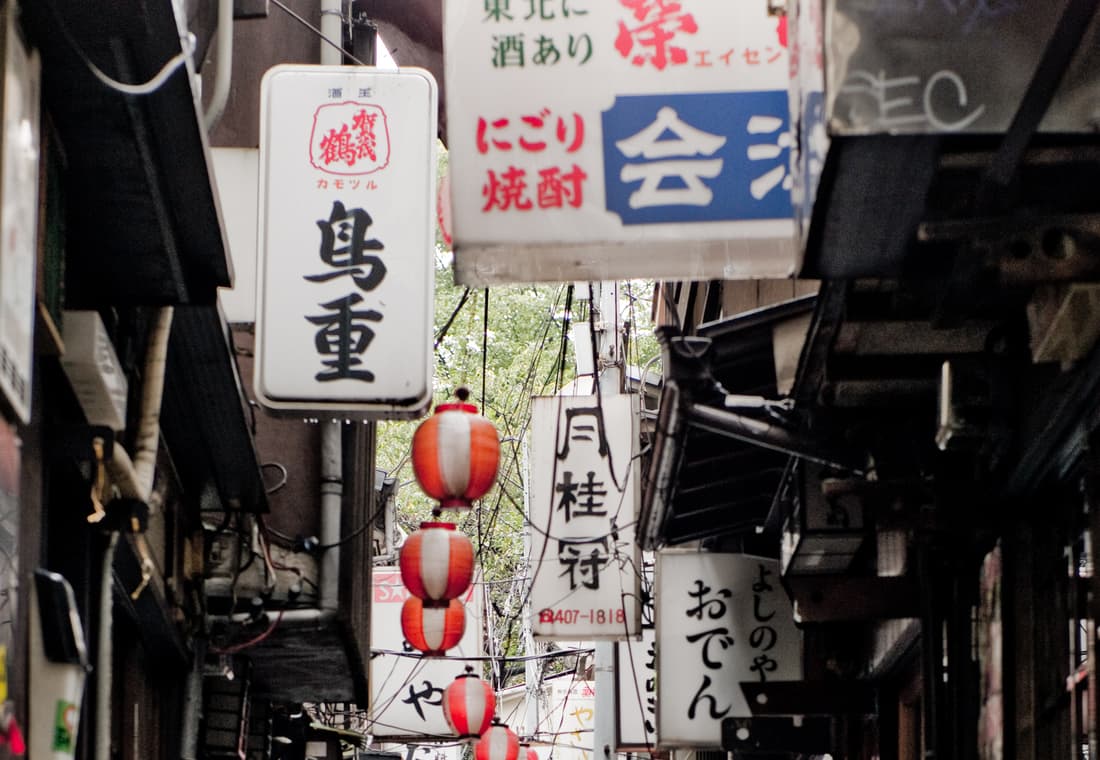
Nonbei Yokochō
Two lanes of tiny bars beside the tracks
About 40 small bars fill two narrow lanes north of the crossing, squeezed up against the Yamanote embankment and barely changed since the 1950s. It does what Golden Gai does at a quarter of the size, with a fraction of the visitors.
Our take
Better than Golden Gai if you want the same thing without the crowd, and closer to most hotels. Same etiquette applies: small rooms, ask about the cover charge, don’t turn up as a group of six.
Joi Ito from Inbamura, JapanCC BY 2.0
- Cost
- Drinks from ¥700
- Allow
- An evening
Cat Street
Pedestrian shopping street to Harajuku
A curving backstreet runs north from Shibuya to Harajuku along the line of a river they covered over. It’s lined with independent clothing shops and coffee. Take it as the walk between the two districts and you skip Takeshita Street entirely.
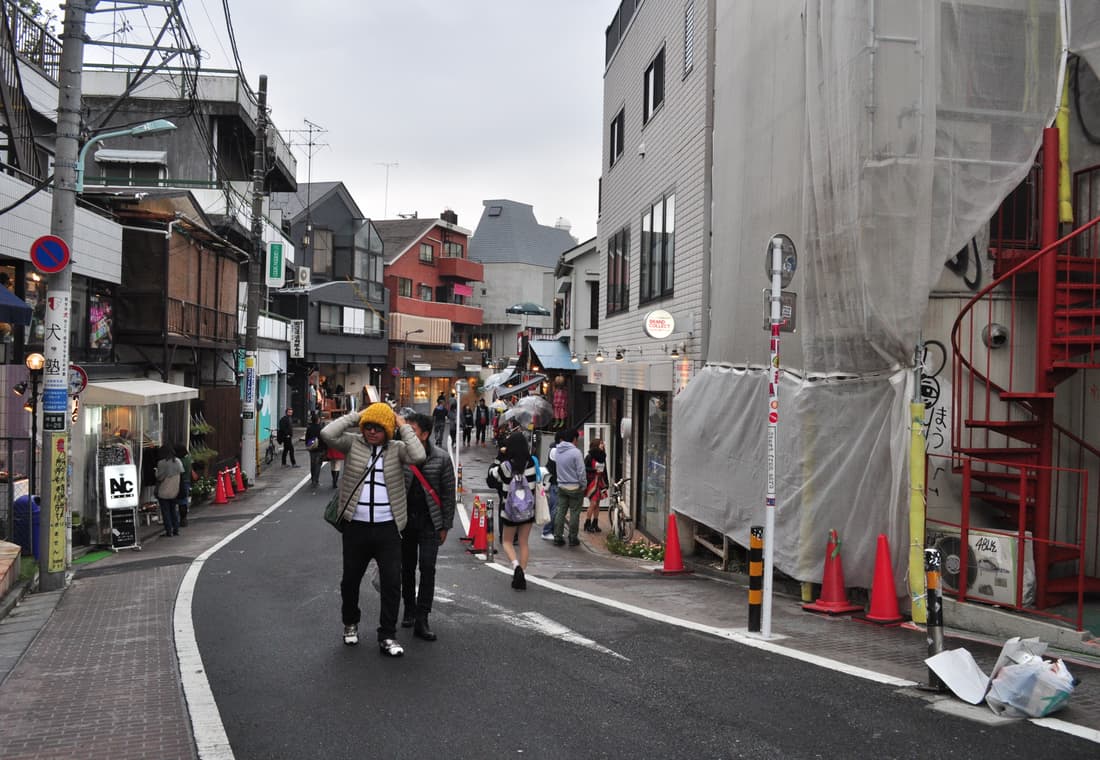
Joe Mabel on Flickr as Joe Mabel from Seattle, USCC BY-SA 3.0
- Cost
- Free
- Allow
- 20 minutes to walk
Sleeping in Shibuya
Younger and more fashion-driven than Shinjuku, built around the famous crossing and spreading into the quieter backstreets of Tomigaya and Shōtō. Stay here if you want nightlife and shopping, and you’d rather walk home than catch a last train.
Asked about Shibuya
What is there to do in Shibuya besides the crossing?
Plenty, all within 20 minutes on foot. Shibuya Sky is the best paid view in the city. Meiji Jingū is a forest of about 100,000 trees a short walk north. Miyashita Park is a rooftop park with a food street underneath, and Nonbei Yokochō is a quieter answer to Golden Gai. The shopping along Center Gai and Cat Street fills whatever time is left.
Is Shibuya Sky worth the money?
Yes, which isn’t true of most paid views in Tokyo. The deck is open to the sky rather than behind glass, it sits directly above the crossing, and Fuji shows on clear days. Book online at about ¥2,500 and take a slot 40–60 minutes before sunset. One catch: the rooftop closes in high wind or rain, and getting your money back isn’t straightforward.
Where is the best view of Shibuya Crossing?
For free, the second-floor walkway inside Shibuya Station looks straight down on it and is open whenever the station is. The Starbucks in the Tsutaya building has the most photographed angle, but you have to buy a drink and wait for a window seat. Paid, there’s Mag’s Park on the roof of Magnet by Shibuya109, which is cheap and low, and Shibuya Sky, which is high enough that the crossing turns into a detail rather than the subject.
How far is Meiji Jingū from Shibuya?
About 25 minutes on foot through Cat Street and Harajuku, which is a good walk in itself. Or take the Yamanote one stop to Harajuku and walk 5 minutes to the torii. Entry is free, and the shrine closes at sunset, so check the time in winter.
Is Shibuya or Shinjuku better?
Shibuya is younger, more compact, and easier on a first visit because you can walk between things — the crossing, a rooftop and a forest all sit close together. Shinjuku has better transport, a better garden and better drinking alleys, but it’s spread out and takes 10 minutes to cross. For one evening, Shibuya. For a base, Shinjuku.
Other districts in Tokyo
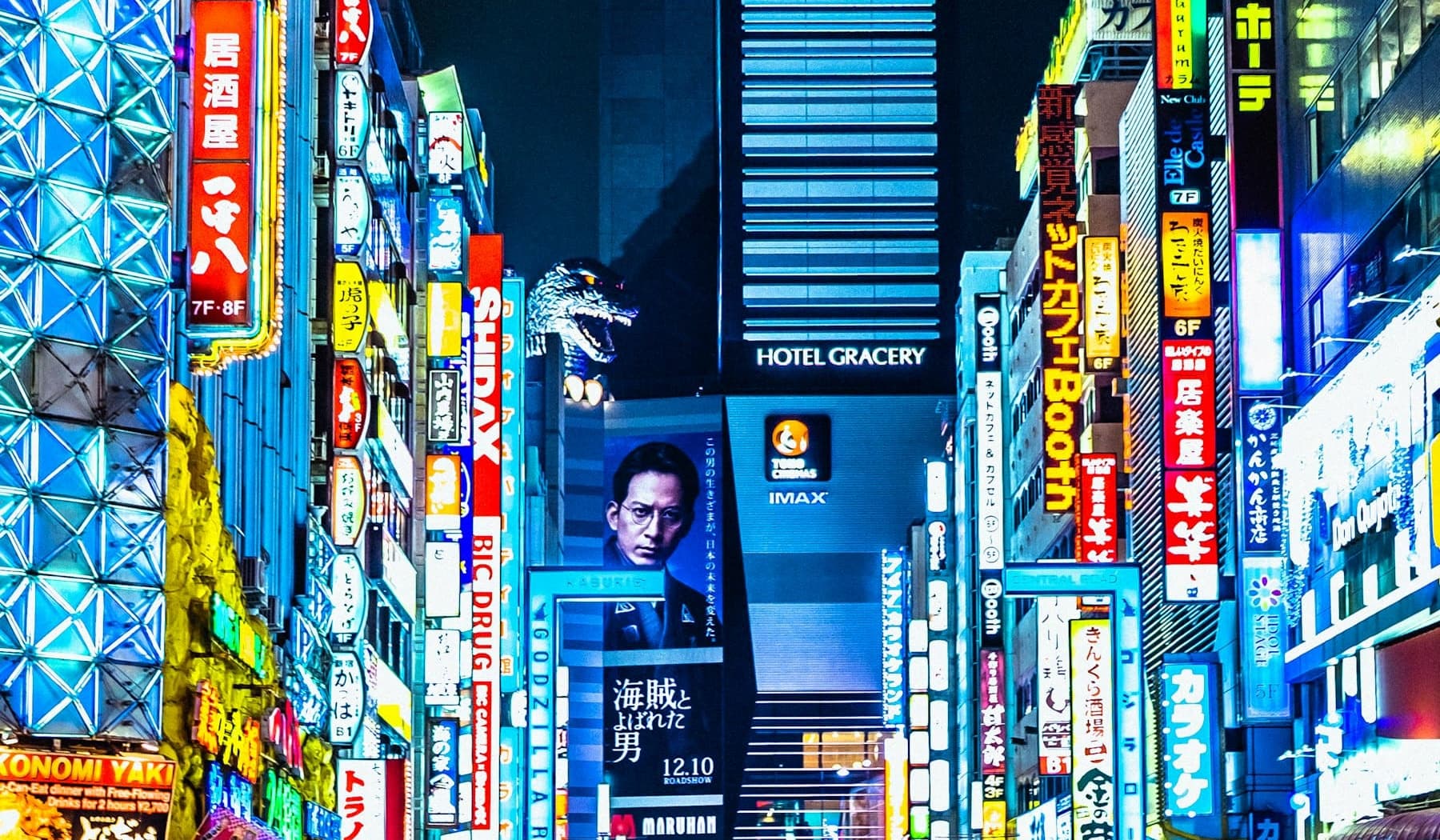 Things to do in ShinjukuThe busiest transport hub in the world, wrapped in department stores, izakaya alleys and the nightlife of Kabukichō. Loud, convenient, and never shut.
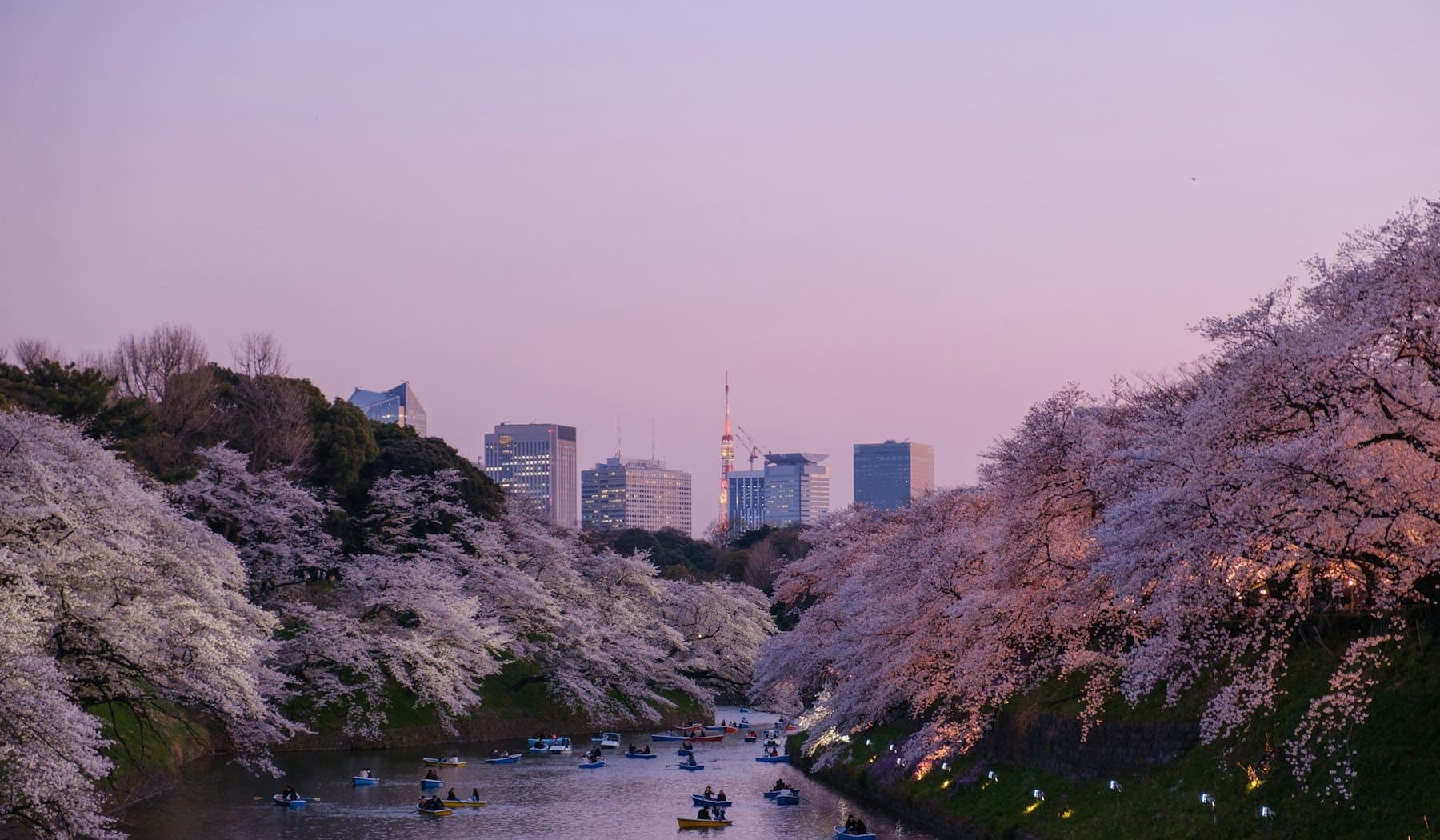 Things to do in MarunouchiThe business district beside the Imperial Palace gardens. Polished, calm in the evenings, and the best-connected point in the country for going anywhere else.
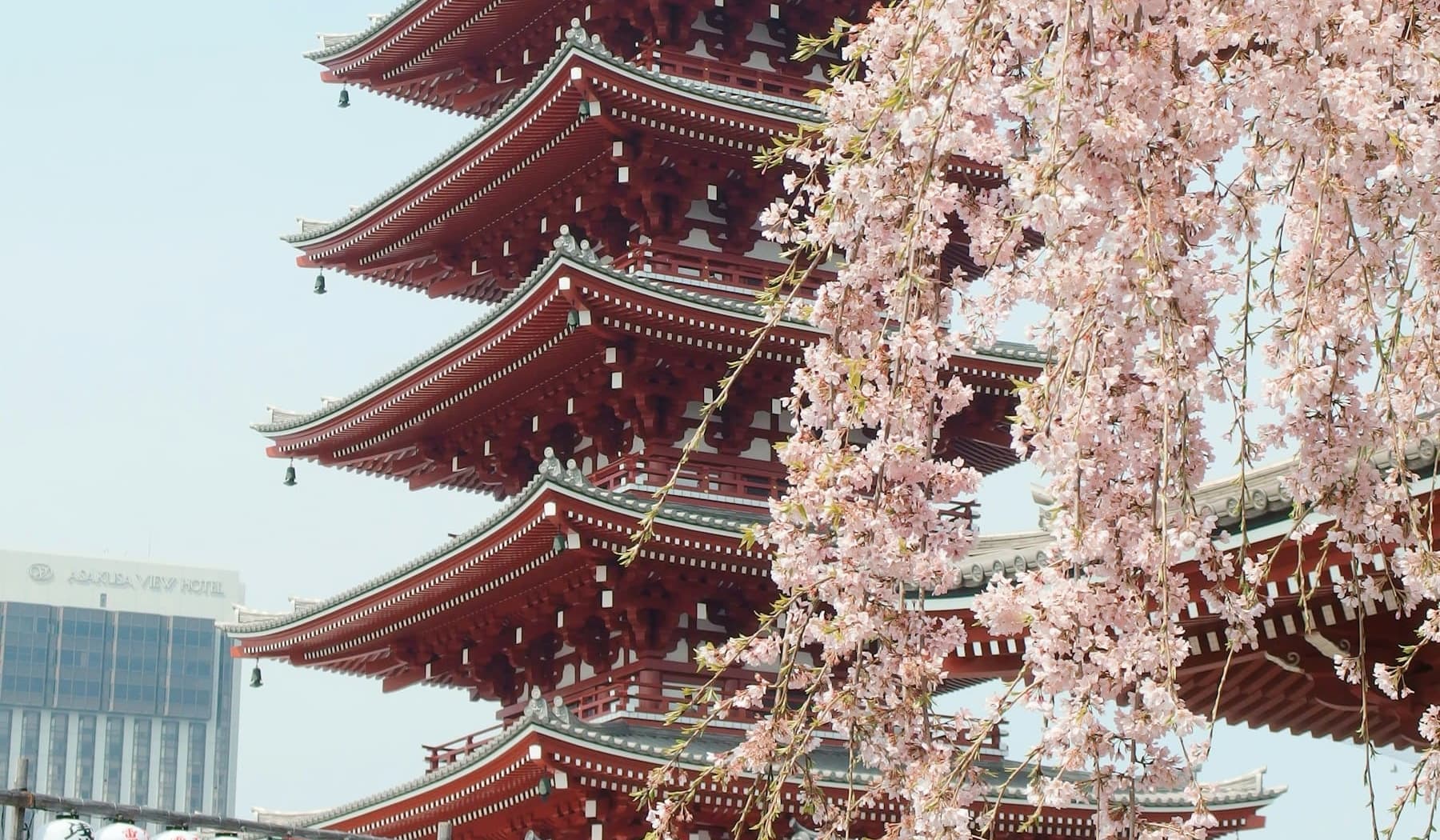 Things to do in AsakusaOld Tokyo around Sensō-ji temple, with low buildings, craft shops and a river. The cheapest of the areas worth staying in, and the best of them early in the morning.
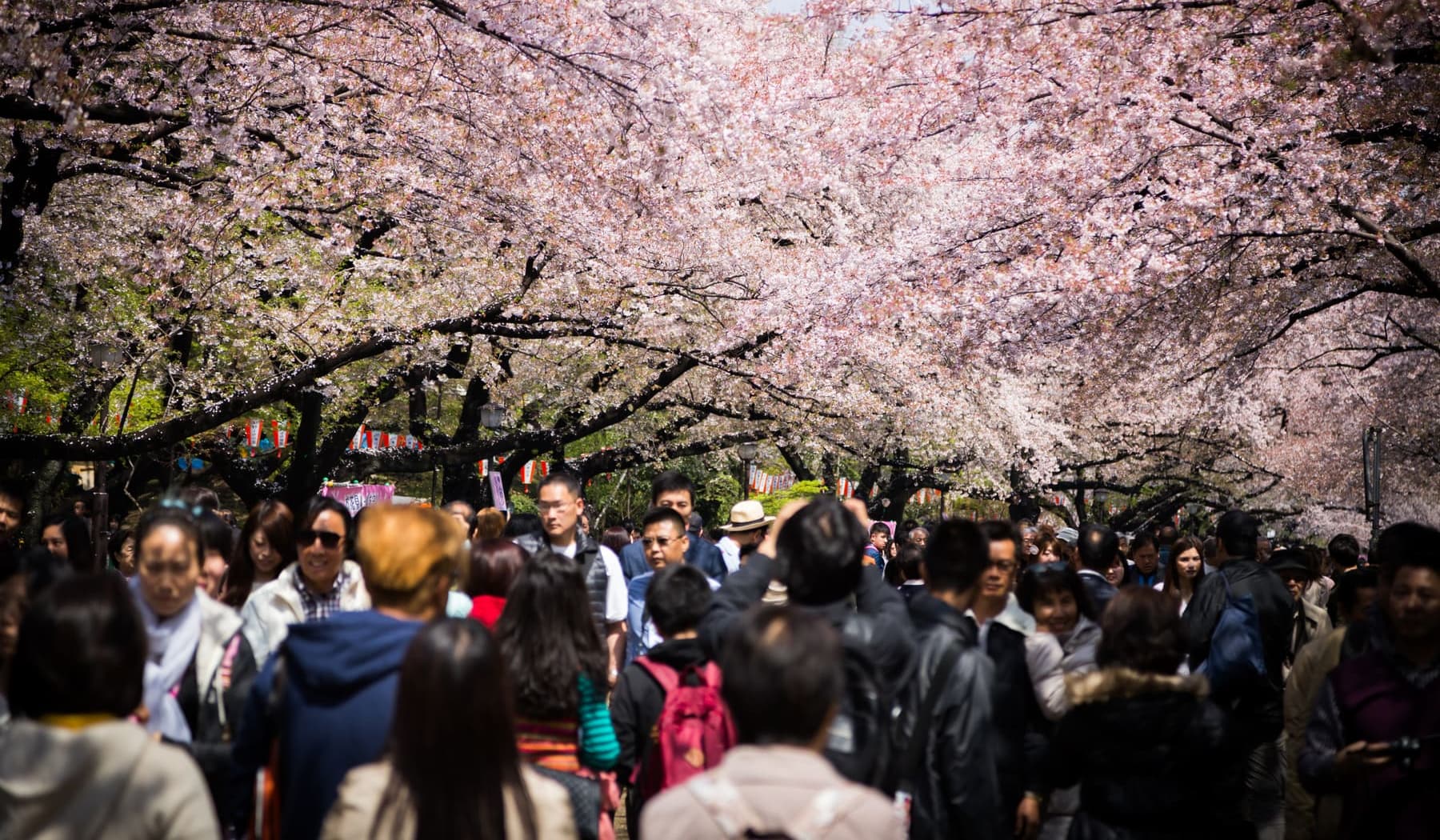 Things to do in UenoMuseums, a big park and a sprawling street market, with good-value rooms and a direct Skyliner from Narita.
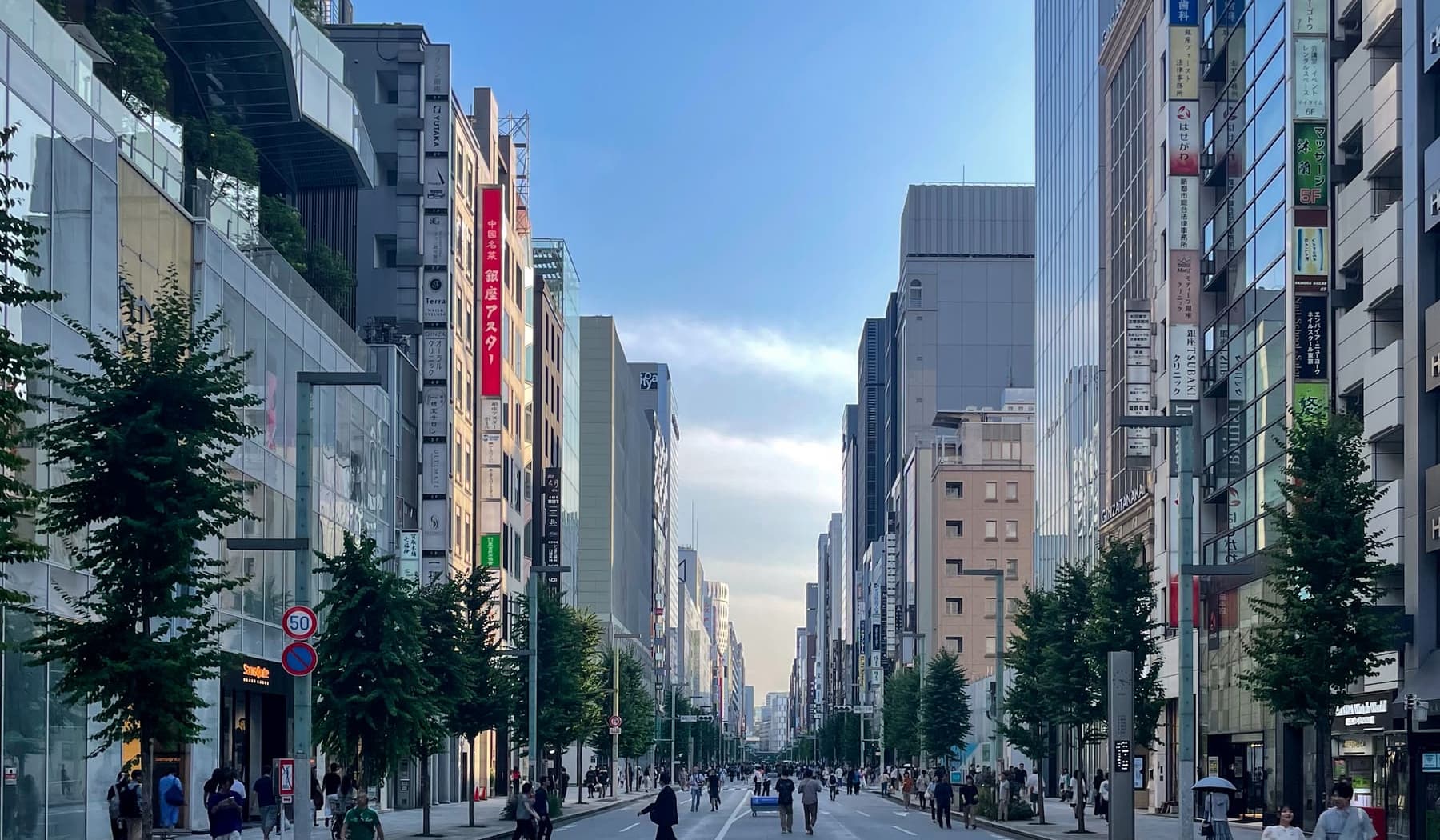 Things to do in GinzaTokyo at its most expensive and most composed. Flagship stores, serious restaurants and galleries, and largely quiet once the shops shut.