
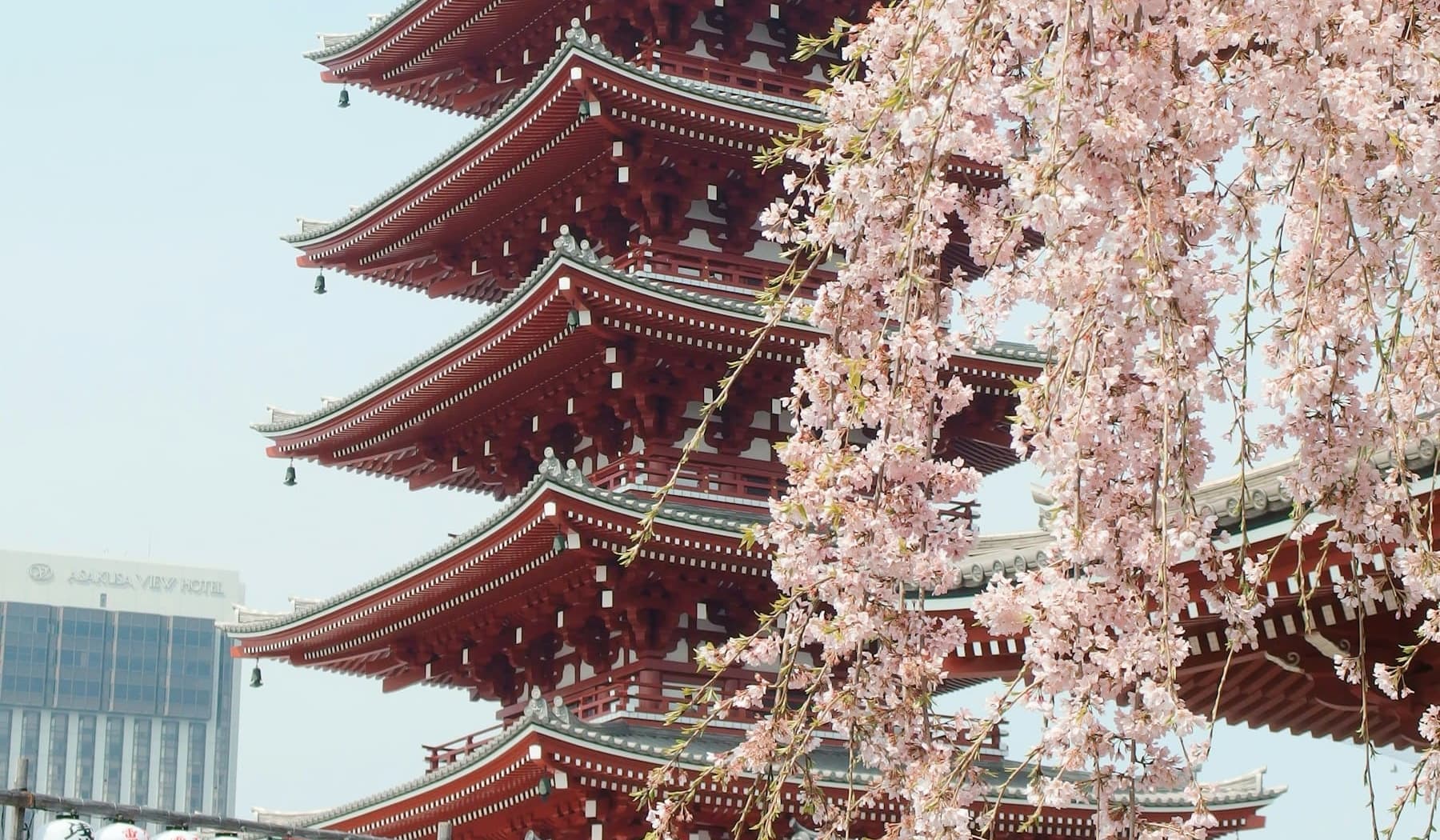
Where to Stay in Asakusa, Tokyo
Rooms from ¥3,000 a night, and an honest account of what that buys.
- From ¥3,000
- 4 pockets compared
- Cheapest bed, from
- ¥3,000
- Pockets compared
- 4
- Mid-range day
- ¥18,000
- Lines serving it
- 4
Best for
Budget travellers who want a real neighbourhood, early temple mornings, and a direct train to Haneda.
Dorms from ¥3,000, private rooms from ¥8,000, 4 pockets compared below.
What a room here costs
Asakusa has the cheapest beds of any Tokyo district worth staying in. Hostel dorms start around ¥3,000 and private business-hotel rooms around ¥8,000, which is roughly a third less than the same room in Shinjuku or Shibuya. More of what’s here is small and independently run than anywhere else central.
Price isn’t the only reason to pick it. Asakusa is low-rise, quiet after 9pm, and built around a temple rather than a station. The reason against it is the map. You’re on the north-east edge of the centre, so Shinjuku and Shibuya are 25–35 minutes away with a change.
Dorm bed, low season. Private rooms start around ¥8,000, and a mid-range business hotel runs ¥12,000–18,000. Treat these as planning baselines rather than quotes — they climb steeply during cherry blossom and the New Year week.
What you gain, and what you give up
Every district in Tokyo is a compromise. These are the terms of this one.
In its favour
- The cheapest rooms in central Tokyo that are still somewhere you’d want to walk around at night.
- Direct Toei Asakusa line trains to Haneda with no change, which saves you an hour on the days you arrive and leave.
- A real neighbourhood. Shops that serve the people who live here, streets quiet by 10pm, and a temple you can walk to before breakfast.
- More ryokan and small independent hotels than anywhere else central, if you want tatami without leaving the city.
Against it
- Shinjuku and Shibuya are 25–35 minutes away, usually with a change. A night out west means planning how you get back.
- The Ginza line stops just after midnight, which is early by Tokyo standards.
- Most restaurants stop serving between 9pm and 10pm and there aren’t many bars. A late dinner means travelling for it.
- The blocks around the temple fill with day visitors from mid-morning. Two streets back is noticeably quieter for the same money.
Which part of Asakusa
The district is not uniform. Two streets can be the difference between a quiet morning and a coach park.
Around Kaminarimon and Nakamise
The most convenient and the most disturbed. You’re a minute from the temple gate and inside the day crowd from 10am to 5pm. Best for a single night when you want the temple at dawn and then to move on.
North and west of the temple
Two or three streets back, towards Kappabashi and Iriya. Same walking distance to everything, noticeably cheaper, and residential enough that you’ll buy breakfast next to people heading to work.
The riverside, towards Azumabashi
Higher floors here look across the Sumida to Skytree, and it’s the one room view in Asakusa worth paying for. Slightly further from the station and a little more for the same room.
Around Tawaramachi and Inarichō
One stop down the Ginza line. Cheaper again, and closer to Ueno’s museums than to the temple. Worth it if budget is the thing deciding for you.
Named properties for Asakusa, with ratings and the pocket each one sits in, land once the nightly rates can be traced to a source. The pockets above carry the price ranges in the meantime.
Before you book
- Japanese hotels often price per person rather than per room, so a twin booked for one guest can come out cheaper than the same room booked for two. Check what the rate covers before you compare.
- Rooms are small by international standards. A standard business-hotel double is often 11–14 sq m. Filter by room size rather than star rating if space matters to you.
- Three periods double the price here: cherry blossom in late March, Golden Week in early May, and the New Year week. Book those 3–4 months out.
- A room advertised as near Asakusa Station might mean the Tsukuba Express station, 5 minutes west on a different line. Check which one before you book.
- Ryokan here often include breakfast and charge you for it whether you eat it or not. If you plan to be at the temple at 7am, you won’t.
Staying in Asakusa
Is Asakusa a good area to stay in Tokyo?
Yes, especially on a first visit or a tight budget. It’s the cheapest district in central Tokyo that’s genuinely pleasant to walk around, it feels like a neighbourhood rather than a terminal, and it has a direct line to Haneda. The trade-off is that Shinjuku and Shibuya are 25–35 minutes away with a change. It suits people who want temples and good food more than people who want to be out until 3am.
How much is a hotel in Asakusa per night?
About ¥3,000 for a hostel dorm, from ¥8,000 for a small private room, and ¥12,000–18,000 for a comfortable business hotel. That’s roughly a third less than the same room in Shinjuku. Prices climb steeply during cherry blossom in late March, Golden Week in early May, and the New Year period.
Is Asakusa or Shinjuku better for a first visit?
Shinjuku if you want the transport network on your doorstep and don’t mind constant noise. Asakusa if you want a cheaper room and a quieter street. For a first trip of 4 days or more, Shinjuku wins, because time on trains adds up. For a shorter trip built around temples, markets and early mornings, Asakusa does.
How far is Asakusa from Tokyo Station?
About 20 minutes. Take the Ginza line to Kanda and change one stop to the Yamanote, or about 15 minutes by taxi outside rush hour. Haneda is the more useful number for most people, and that’s a direct Toei Asakusa line train with no change at all.